History
Past to Present
History – A Chronological History of Norfolk Heritage Park, Sheffield.
Norfolk Heritage Park is one of Sheffield’s most historic and important green spaces. Its story stretches back hundreds of years, from medieval deer parks and royal connections to Victorian public recreation, industrial expansion, royal visits, urban redevelopment and major restoration projects. Today, the park remains a treasured landscape overlooking Sheffield city centre and stands as one of the city’s greatest surviving historic assets.
1600’s Medieval Origins
Long before it became a public park, the area now known as Norfolk Heritage Park formed part of an extensive medieval deer park associated with Sheffield Manor. This vast estate stretched from the area around present-day Sheffield Town Hall towards Arbourthorne.
The parkland was owned by the powerful Earls of Shrewsbury and served as a hunting ground for the local nobility. Around 1,000 fallow deer grazed within the park, providing both sport and food for the gentry. The estate also included the Manor Turret, part of Sheffield Manor Lodge, famous for its connection with Mary, Queen of Scots. During her imprisonment in England between 1569 and 1584, Mary was held for periods at Sheffield Manor and the surrounding estate.
1637 - The Dukes of Norfolk
A significant change occurred in 1637 when the estate passed through marriage to the Howard family, the Dukes of Norfolk.
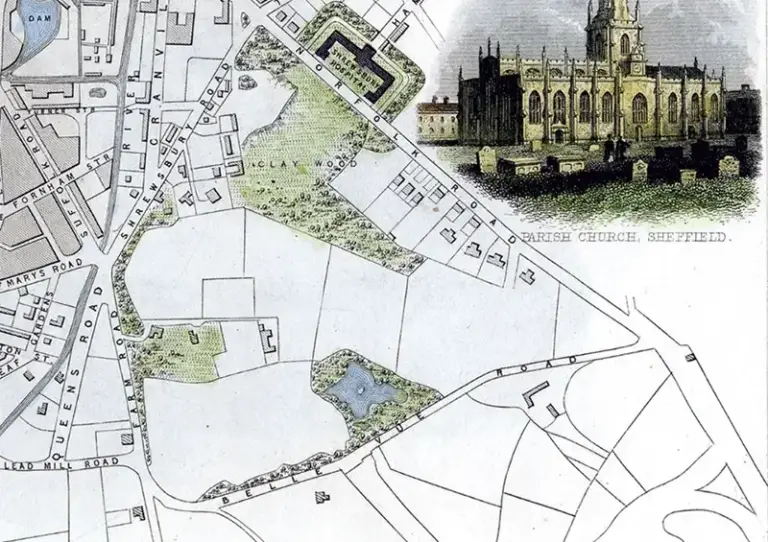
Over the following centuries, much of the original medieval deer park was gradually given over to agriculture, quarrying and mining. Early maps show the area dotted with coal mines, ironstone workings and quarries, many owned by the Duke of Norfolk's estate. Nearby stood the historic Gin Stables on Stafford Lane, where horses used in the Duke's mines were housed. Remarkably, these buildings still survive today as private residences.
The park itself occupies land once worked for ironstone, while nearby Arbourthorne Quarry, just above the present Guildford Avenue entrance, continued operating well into the twentieth century. Stone extracted from these local quarries was used to construct many of the surrounding houses.
As Sheffield expanded during the Industrial Revolution, the once vast deer park steadily shrank. By the early nineteenth century, around 70 acres (27 hectares) remained. These surviving acres would eventually become Norfolk Heritage Park.
1840s - Designing a Victorian Park
Recognising the rapid growth of Sheffield, the 12th Duke of Norfolk decided to preserve part of his estate as a public park. Norfolk Park officially opened in 1841, making it one of the earliest public parks in Britain and predating many of the country's municipal parks.
The landscape was carefully designed in the fashionable Victorian style, featuring:
- Grand avenues of lime and oak trees
- Wide sweeping carriage drives
- Ornamental planting
- Entrance lodges and gates
- Expansive open lawns
- Spectacular viewpoints overlooking Sheffield
The park opened only a few years after the nearby Botanical Gardens and reflected Victorian beliefs that attractive green spaces improved both public health and social wellbeing. Historic records also suggest the original vision for the park was never fully completed, illustrating the ambition behind its design.
Although surrounded largely by open countryside when it first opened, the Duke's decision ensured that this valuable green space would be protected as the city expanded around it.
Victorian Recreation
From its opening, Norfolk Park quickly became one of Sheffield's favourite places for leisure and recreation. Families visited for walks, horse-drawn carriage rides, sporting activities and community events.
One of its best-loved traditions became the annual Whit Sings, held during Whitsuntide, when churches from across Sheffield gathered to sing hymns before thousands of spectators. For generations of Sheffield families this became one of the city's most cherished annual occasions.
The Growing City
The area surrounding the park changed dramatically throughout the nineteenth century. Former industrial land gradually gave way to elegant houses overlooking the town before extensive residential development spread across the surrounding hillsides.
The park itself evolved alongside the city. The original entrance was from what is now Norfolk Park Road. Following the construction of Granville Road in 1876, the impressive new main entrance, complete with lodge buildings and ornamental lamp post, became the principal gateway that visitors know today. The beautiful Arbourthorne Cottages, built shortly after the park opened to house employees of the Duke of Norfolk, still survive close to the Guildford Avenue entrance.
1897 – Queen Victoria's Historic Visit
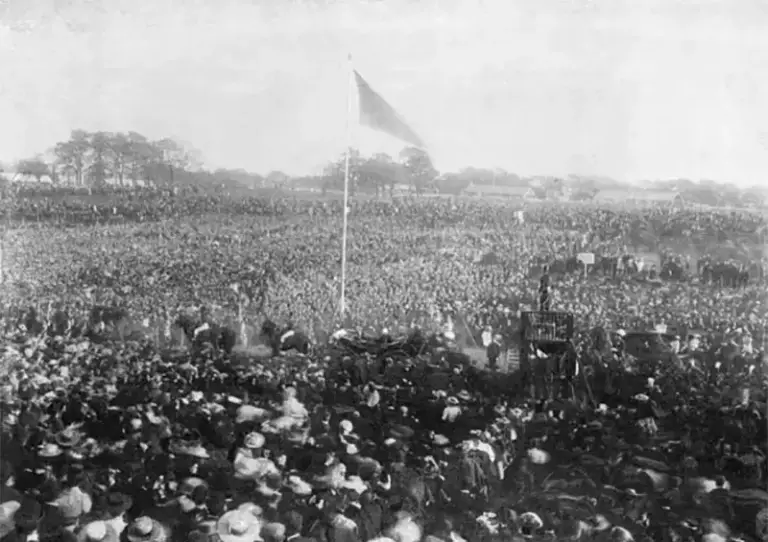
The most famous event in the park's history took place on 21 May 1897, when Queen Victoria made her first and only visit to Sheffield.
Having officially opened Sheffield Town Hall, the Queen travelled to Norfolk Park, entering through the lower Norfolk Park Road entrance. Here she was greeted by one of the largest public gatherings ever witnessed in the city.
Approximately 50,000 schoolchildren performed patriotic songs and hymns specially arranged for the occasion, while contemporary reports estimated that as many as 200,000 spectators filled the park and surrounding hillsides. With Sheffield's population then standing at around 300,000, it is believed that well over half the city's residents witnessed the event, making it arguably the largest public gathering in Sheffield's history.
The visit formed part of Queen Victoria's Diamond Jubilee celebrations and was especially significant because the Duke of Norfolk was serving as Lord Mayor of Sheffield at the time. Following the ceremony, the Queen visited Cammell's steel works before continuing her journey to Balmoral.
Remarkably, while the Town Hall celebrations were photographed and even filmed, very few images survive of the enormous gathering within Norfolk Park itself.
1909-1910 - A Gift to the People of Sheffield
A landmark moment occurred in May 1909 when the 15th Duke of Norfolk announced that Norfolk Park would be gifted to the City of Sheffield.
Newspapers celebrated the announcement with headlines describing it as "A Gift Worth £60,000." Although the park had long been freely open to the public, ownership now formally passed to Sheffield Corporation, ensuring its permanent protection for future generations.
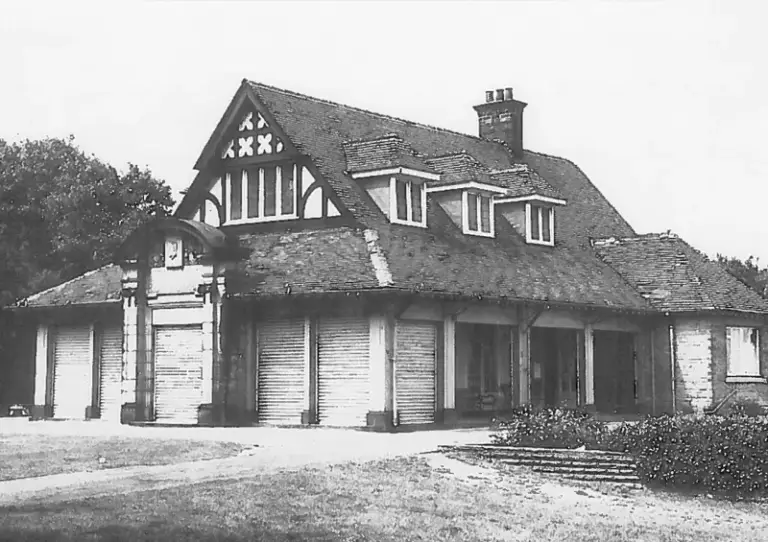
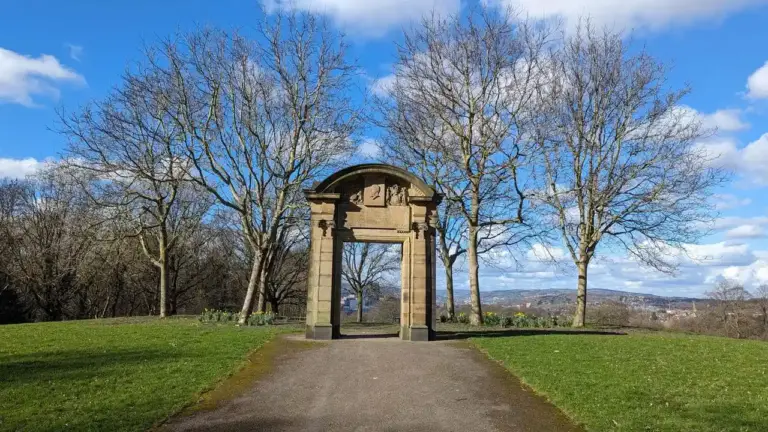
To commemorate the transfer, a refreshment pavilion and ornamental stone arch were constructed in 1910. While the pavilion has since disappeared, the Duke of Norfolk memorial arch still survives today overlooking the city and remains one of the park's most recognisable historic landmarks.
1930's - 1950's – Recreation and Expansion
Throughout the twentieth century the City Council expanded the park's recreational facilities, introducing:
Bowling greens
Tennis courts
Sports pitches
Children's recreation areas
The bowling greens remain in use today by one of Sheffield's oldest bowling clubs, continuing a sporting tradition that stretches back almost a century.
During the late 1950s another significant addition was made when the ancient woodland and stream known as Jervis Lum became part of the park. This protected an important area of mature woodland that reflects the natural landscape that existed long before the city developed.
1960's – The "City in the Sky"
The post-war decades transformed the surrounding landscape. Much of the nearby farmland disappeared as Sheffield undertook one of Britain's most ambitious housing programmes.
The construction of Park Hill, Hyde Park and neighbouring estates created the famous "City in the Sky," dramatically changing the skyline while greatly increasing the surrounding population. Despite this urban transformation, Norfolk Heritage Park continued to provide vital open space, wildlife habitats and panoramic views across Sheffield.
1980's and 1990's - Decline and Renewal
Like many historic parks, Norfolk Heritage Park suffered from declining investment during the late twentieth century. Historic structures deteriorated and facilities became increasingly difficult to maintain.
Recognising its historic importance, Sheffield City Council, local residents and community organisations worked together during the 1990s to secure the park's future.
1998 – Heritage Lottery Restoration
A major breakthrough came in 1998 when Norfolk Heritage Park received:
- £2.3 million from the Heritage Lottery Fund
- Additional funding from partner organisations
- A total restoration programme worth approximately £4.7 million
The funding recognised the national historic significance of the park and enabled comprehensive restoration of many of its historic features, avenues, entrances and landscape.
Norfolk Heritage Park Today
Today, Norfolk Heritage Park remains one of Sheffield's finest historic parks and one of the city's most valuable public open spaces. Visitors can stroll beneath the historic Victorian lime and oak avenues, admire the Duke of Norfolk Memorial Arch, and enjoy the Centre in the Park community facility. The park also offers extensive green open spaces, bowling greens and sports facilities, children's play areas, the ancient woodland of Jervis Lum, and outstanding panoramic views across Sheffield, making it a popular destination for both recreation and relaxation.
From its origins as a medieval deer park and industrial landscape to its development as one of Britain's earliest public parks, Norfolk Heritage Park reflects the history, growth and identity of Sheffield itself. More than 180 years after opening, it continues to fulfil the Victorian vision of providing recreation, health and enjoyment for generations of Sheffield residents while preserving one of the city's most remarkable historic landscapes.
This version removes the bullet points while maintaining a natural, readable flow and preserving all of the information.

Norfolk Park and Norfolk FC
A remarkable footballing legacy
The first Michael Ellison played a significant role in Sheffield, particularly as the Duke of Norfolk’s agent, overseeing vast landholdings and development in the area. While he was instrumental in various aspects of Sheffield’s growth, his role in bringing the railways to Sheffield is perhaps his greatest achievement. It is his fellow Catholic and son, Michael Joseph Ellison was the key visionary who identified the plot of land away from the smoke that would evolve into Bramall Lane
It was Michael Ellison who first granted Norfolk FC permission to play football at Norfolk Park. It is listed in the football annuals as the club’s ground from 1868-1880. The current consensus is that the club was formed in 1862. The first external match reports dating from 1863.
Norfolk FC
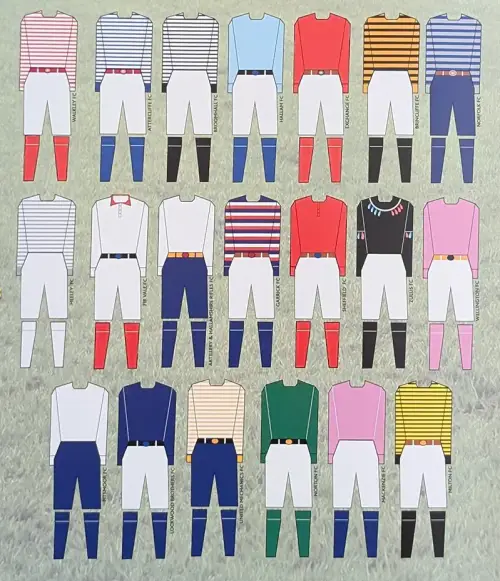
The Norfolk Football Club of Sheffield, named after the Duke of Norfolk, was a very special club, they could have evolved into the major rivals of the Wednesday. Had they survived the onset of the professional era and embraced the future as the Wednesday club did by entering the FA Cup, then they could conceivably have become the principal Bramall Lane football club. In 1867 they reached the final of the world’s first knock-out football competition, the Youdan Cup, losing to Hallam FC in the final.
Norfolk cricket club had been part of the United Cricket Clubs of Sheffield at Bramall Lane since 1857. They used Bramall Lane for a game against Chesterfield in 1873, and remarkable crowds of 7-8,000 attended their annual athletic events at Bramall Lane where John Charles Shaw acted as starter. If Norfolk had become the principal tenant of Bramall Lane, there may have been no need to invent a new club in 1889.
Norfolk was successful on the pitch from the beginning, and they had 270 members in 1869 and 1870. They were one of the most influential of the pioneer clubs, playing games against Chesterfield, Leeds and Nottingham Forest and they were technically innovative. Many of our recent discoveries relating to the unique early football culture in Sheffield come from reports of Norfolk games before 1870.
These games were extremely important in spreading the association style game to two other centres, Nottingham Forest, once affiliated to the Sheffield Association have been European football champions on two occasions, and were it not for a chronic injustice, Leeds would have also won the trophy.
In a trial match at Leeds a tactic of strategically kicking the ball from player to player (passing) to outflank the Leeds’ players is first recorded. In addition, this may be the first time gate money was taken at a football match not associated with a charitable cause. 3d was charged at the gate of the ground in Leeds Royal Park. The game concluding at 4.30 pm.
A game against Nottingham Forest in 1870 is especially lucrative in providing insights into the rapid tactical development of Sheffield football between 1865 and 1870. Games in 1868 and 1869 had both been tight with Norfolk winning by a solitary rouge in both, with JP Donovan the standout Norfolk player of this era.
In 1870 it was a different story. On a day when Norfolk loaned players to the Wednesday club for their game against Derby St Andrews and to the Surrey Club for their game against Rotherham (games which both resulted in victories for Sheffield clubs) Norfolk FC overwhelmed Nottingham Forest 5-1. They retained the services of some of the best players in Sheffield at the time, GH Sampson, JC Clegg, WE Clegg, and J Roberts who was captain.
With Harry Sampson, ‘the little lion’ of Sheffield football, possibly the first player to think of heading the ball as an offensive tactic, and WE Clegg demonstrating their ‘screw kicks’ and ‘brilliant dashing play’, working the ball forward in tandem, Forest struggled to compete.
Norfolk’s apparent demise in 81/82 is probably due to a reluctance to engage with the hybrid amateur/professional culture. They also had extremely close links with the Wednesday club, operating joint athletic events so they may have been slowly subsumed by their more ambitious sister club.